Identifying opportunities to better support early-career professionals
Problem
First-generation professionals often lack access to mentorship and networks, limiting career advancement.
Solution
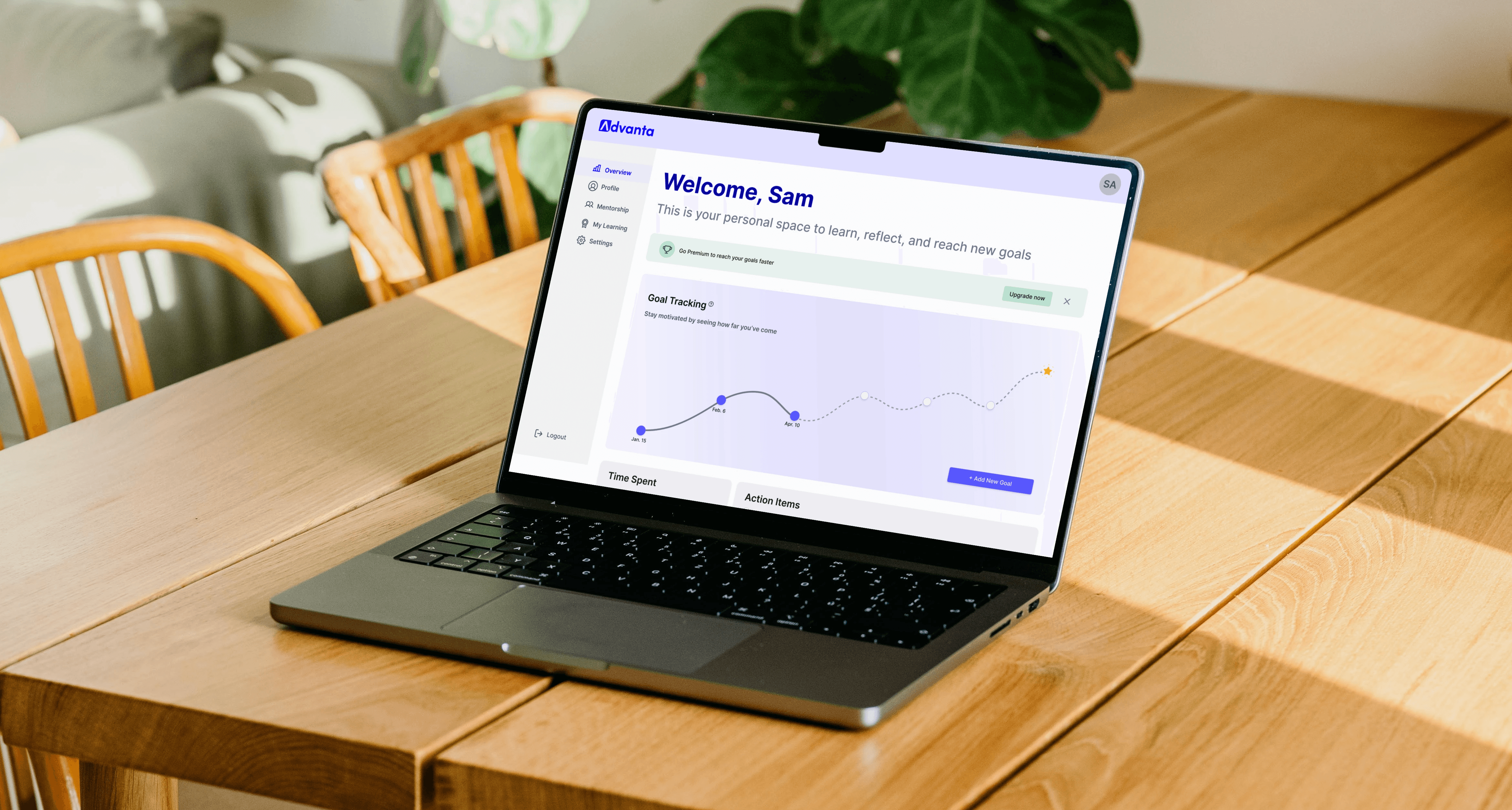
Advanta is a desktop platform designed to help users discover mentors, track professional goals, and access career guidance in one place.
Outcome
User testing revealed confusion around some features and showed that users expected the timeline to be interactive, which led to added guidance and improvements to how the goal setting system.
Understanding the Problem
The idea for this project came from a professional development workshop I attended early in my career. The strategies around mentorship and career growth were eye-opening, and I wished I had learned them sooner. It raised a question: what challenges do people face when support isn’t readily available?
Advanta, a desktop platform that helps first-generation professionals—defined as individuals who enter the workforce without established networks or family mentorship—access career guidance, mentorship, and goal-planning support.
How might we create a structured system that helps first-generation professionals take intentional steps toward career growth?
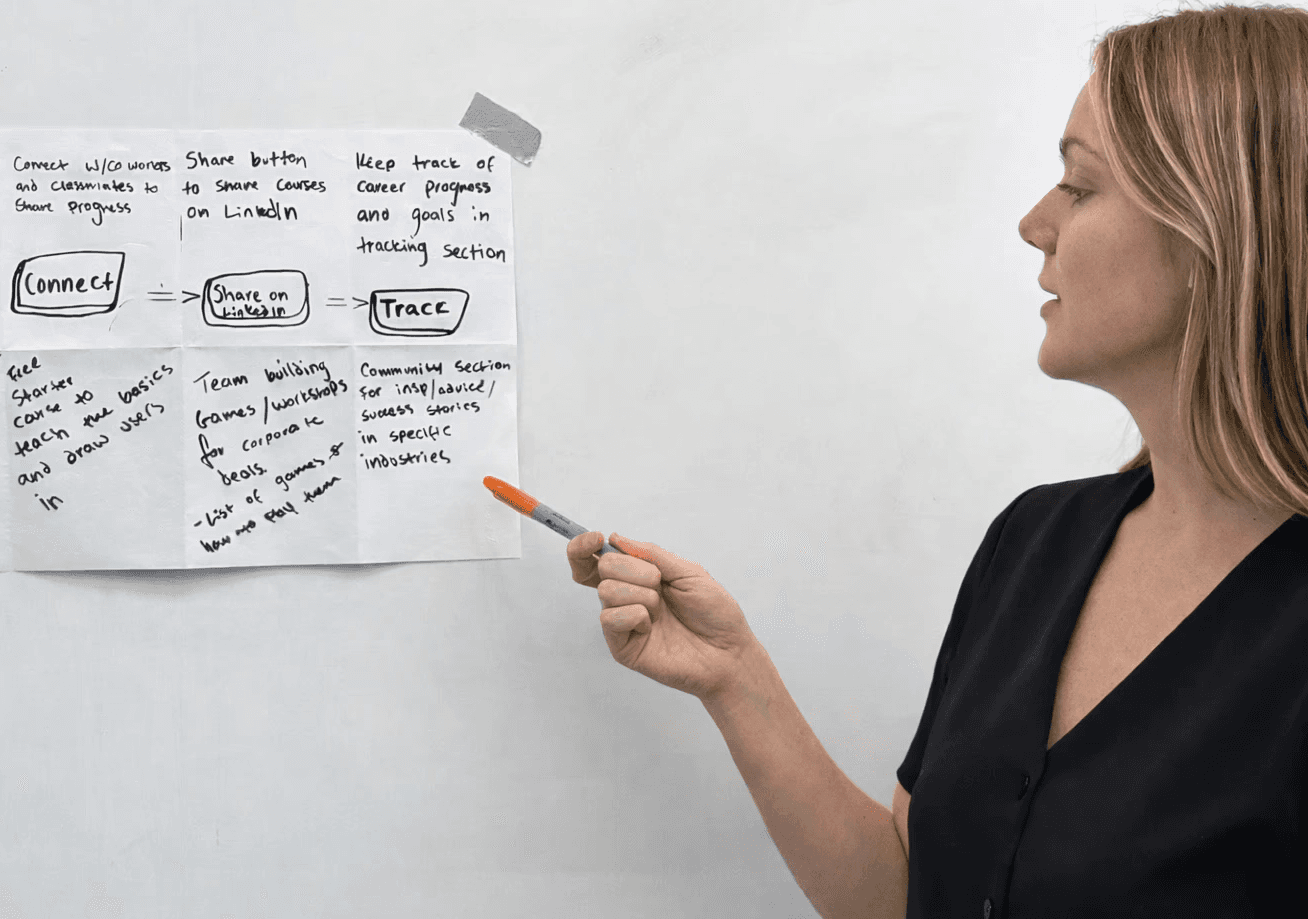
Primary research and market analysis were conducted to understand how professionals across career stages reflect on their early career experiences and where existing systems fall short, revealing gaps, unmet needs, and opportunities for more support.
Surveys
Gathered insights (17 respondents) across tech, environmental, government, creative, education, mental health, finance, and construction.
Market Research
Explored the business landscape surrounding professional development platforms.
Competitive Analysis
Examined existing professional development and mentorship platforms to identify weaknesses, positioning opportunities, and unmet user needs.
Surveys Findings
76.5% of respondents did not receive helpful career guidance at home, and many reported having no professionals in their family.
“There are no professionals in my family”
“I was the first person in my family to go to university”
Unclear Progression Without Structured Support
Respondents described unclear expectations and limited insight into what advancement looked like.
High Demand for Mentor-Led Support
Mentorship consistently emerged as the most requested support system.
Competitor Analysis
Existing Approaches to Career Development
A competitor analysis identified gaps in cost, accessibility, and structured career support across existing platforms.

The Career Accelerators
A certification and mentorship platform with strong outcomes.
High cost, time commitment, and limited industry scope.

Monday Girl
A networking community for women and non-binary professionals, though membership fees and exclusivity limit accessibility.
Membership fees and exclusivity limit accessibility.

Goodwall
A free global platform focused on visibility and early career advice
Lacking structure for long-term professional growth.

Fishbowl
An anonymous peer discussion app that encourages open workplace dialogue
Lacks structured mentorship or guided development.
Research to Design
Research showed that early-career professionals navigate growth through fragmented, informal guidance. This led to the decision to design a centralized system.
Marketing Direction
Promoting the Product
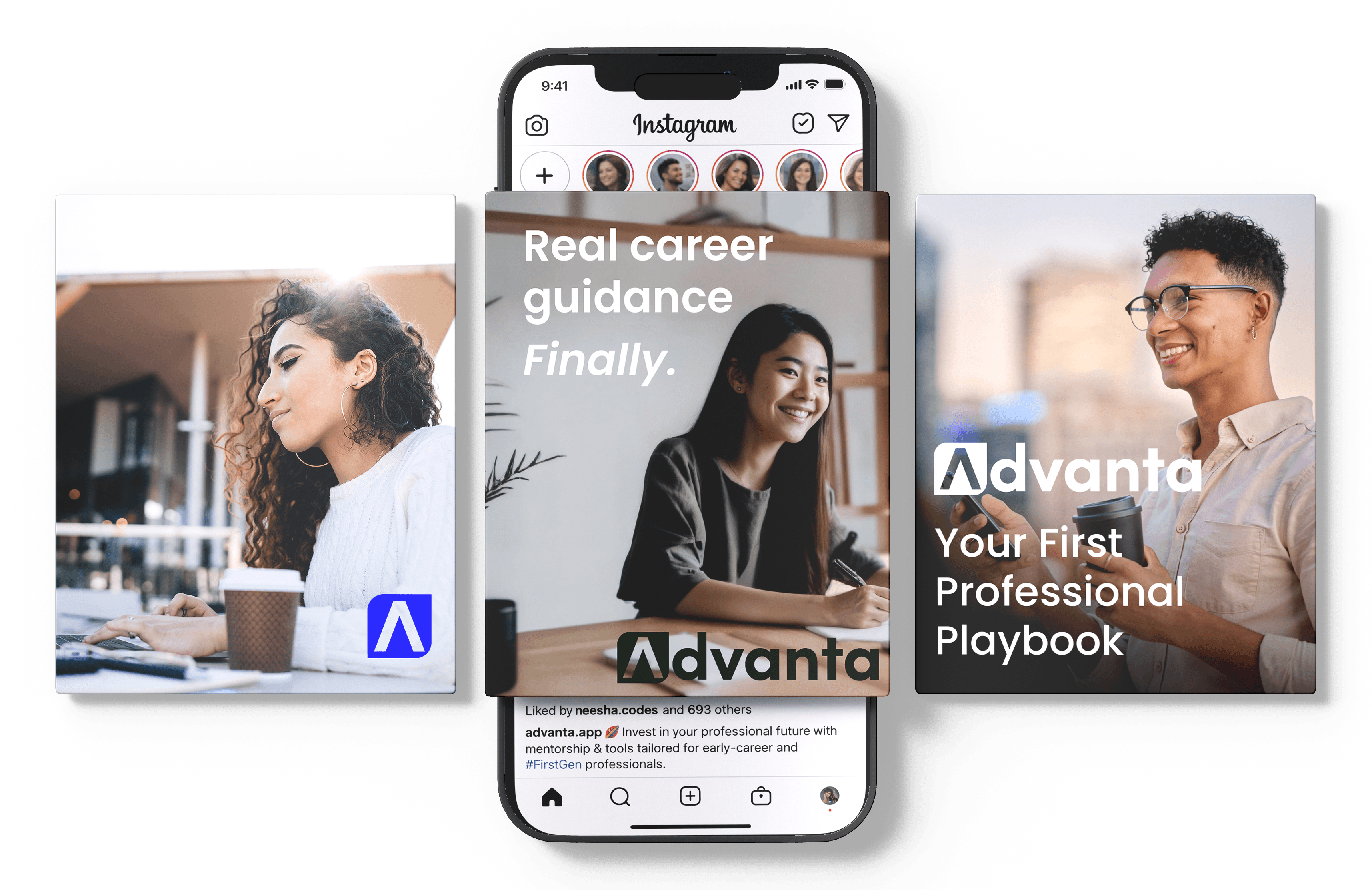
The marketing strategy targeted professionals aged 22–35, including recent graduates and early- to mid-career professionals.
Educational content positioning, highlight courses and mentorship access
Instagram Ads
Ads aligned with the target audience through course previews, mentor spotlights, and workplace scenario tips
Practical career education
Real-world workplace scenarios and guidance focused on day-to-day professional navigation
Information Architecture
Advanta’s structure prioritized clarity and ease of navigation through a goal-first approach to career development. For the minimum viable product, Elissa and I focused on two core features.
Dashboard
Central hub for viewing, managing, and updating active and completed goals.
Mentorship
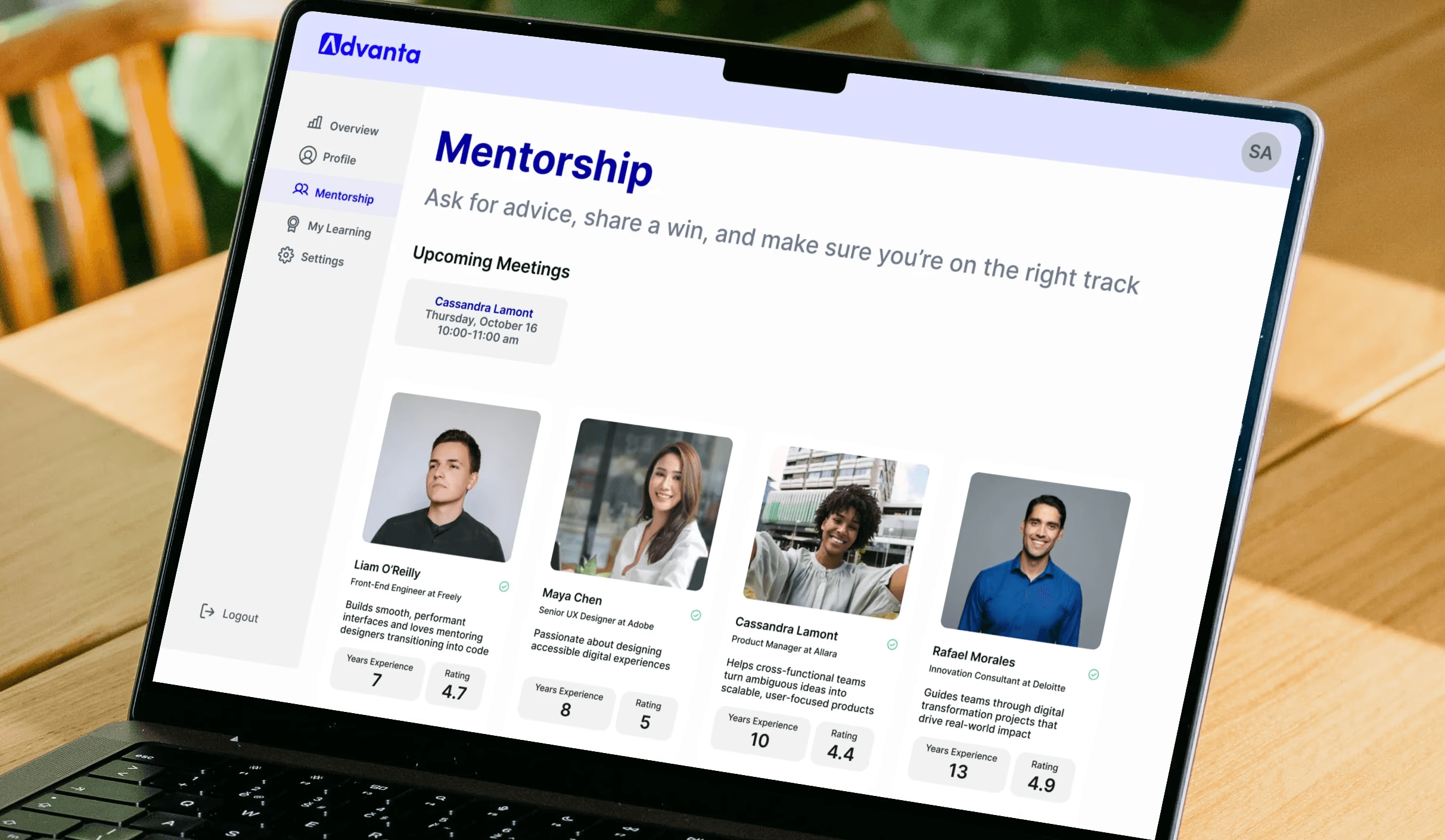
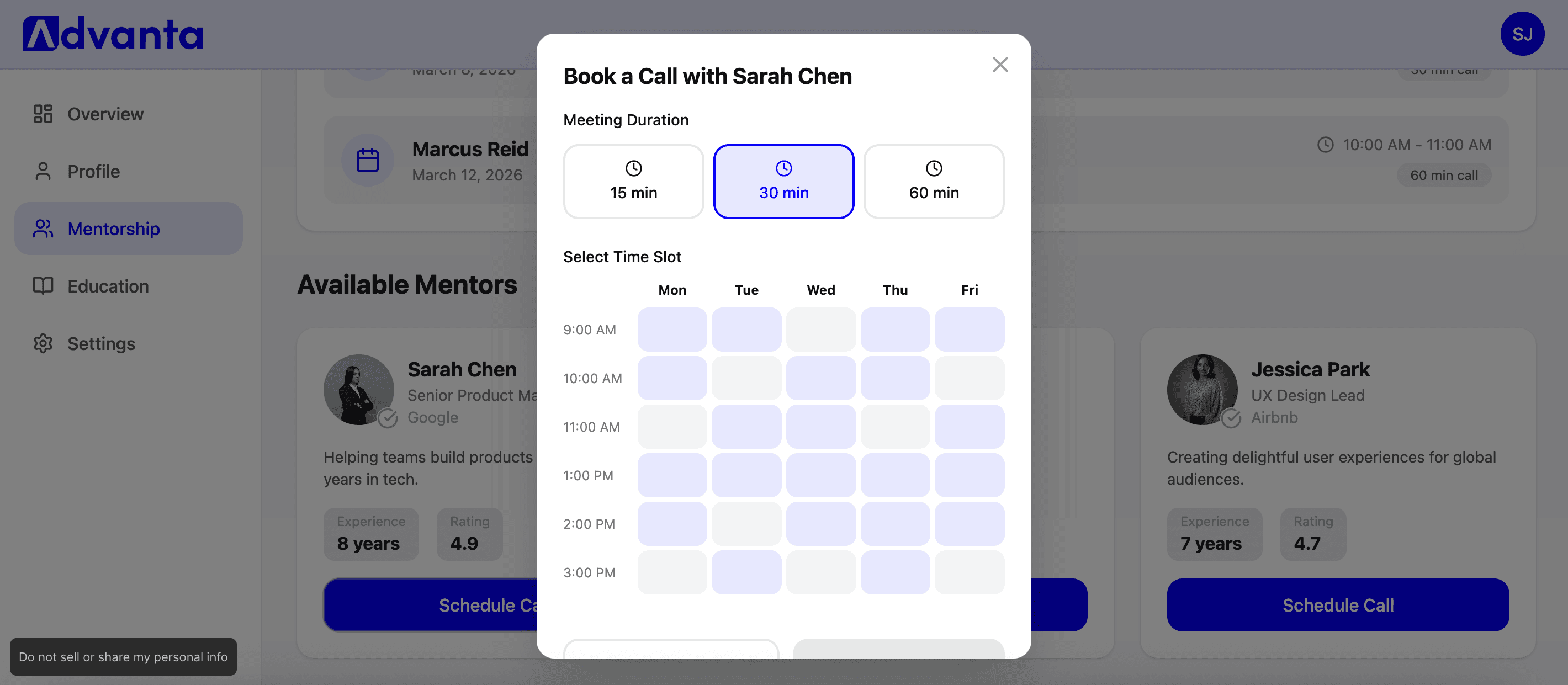
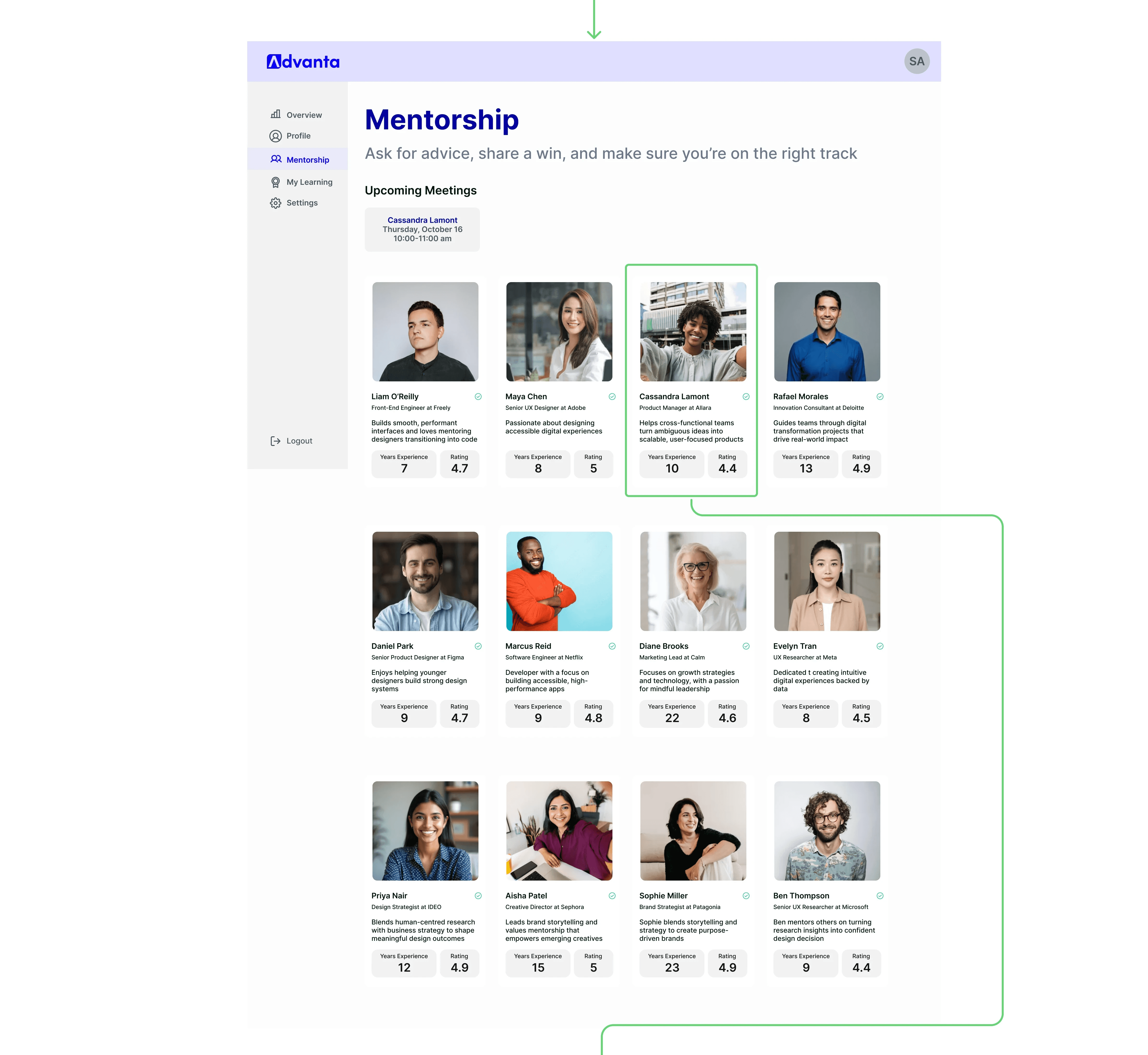
Access point for browsing mentors and booking sessions.
Task Flows
How Users Move Through Advanta
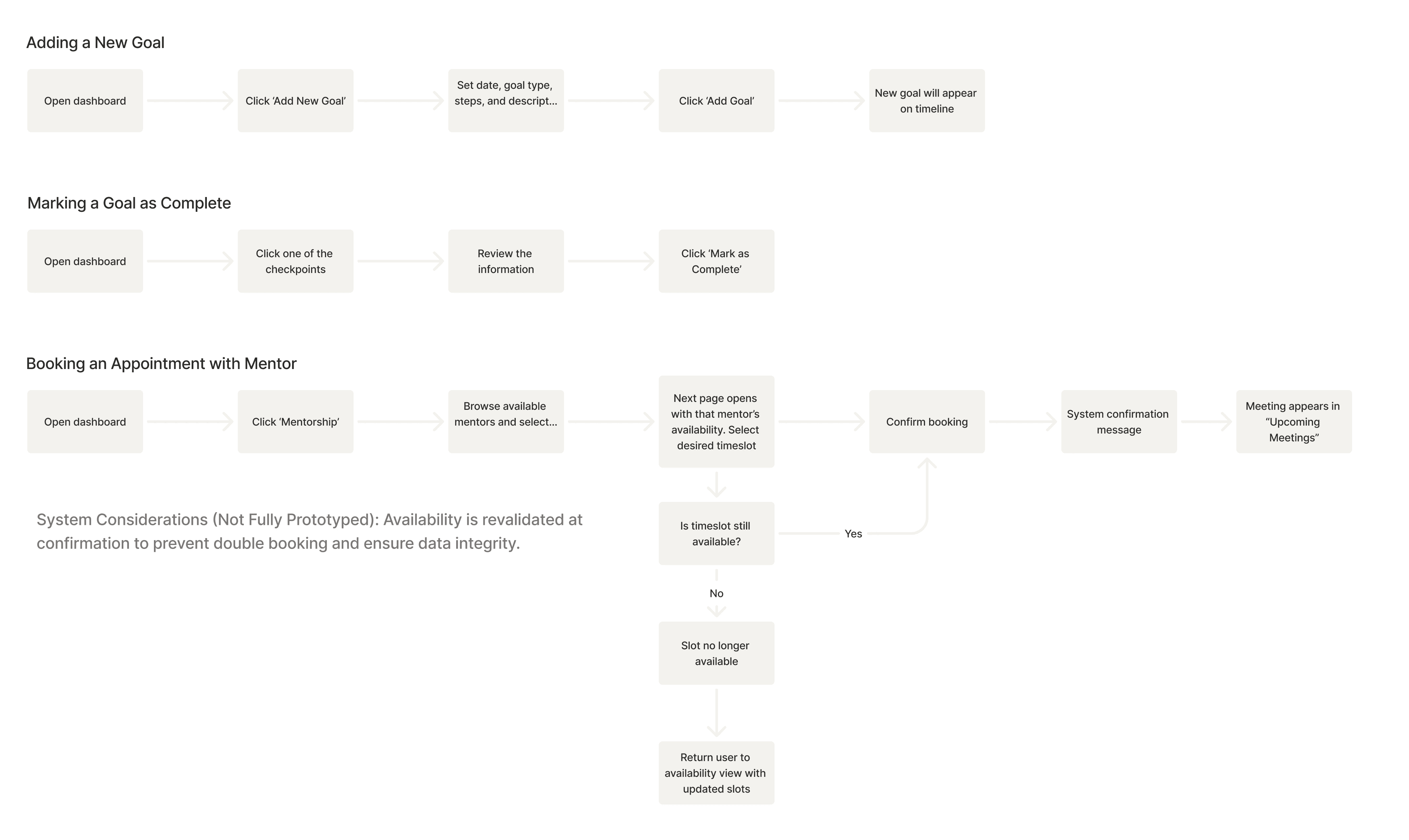
The prototype centred on three primary user actions. Desktop was prioritized to support structured input and longer-form career planning. Goal creation and completion were iterated through multiple rounds, while the mentorship booking flow was developed at high fidelity to communicate the broader system vision.
Usability Testing & Iteration
To validate early assumptions, we conducted two rounds of moderated usability testing — first on a low-fidelity prototype, then on a medium-fidelity version before progressing to high-fidelity design.
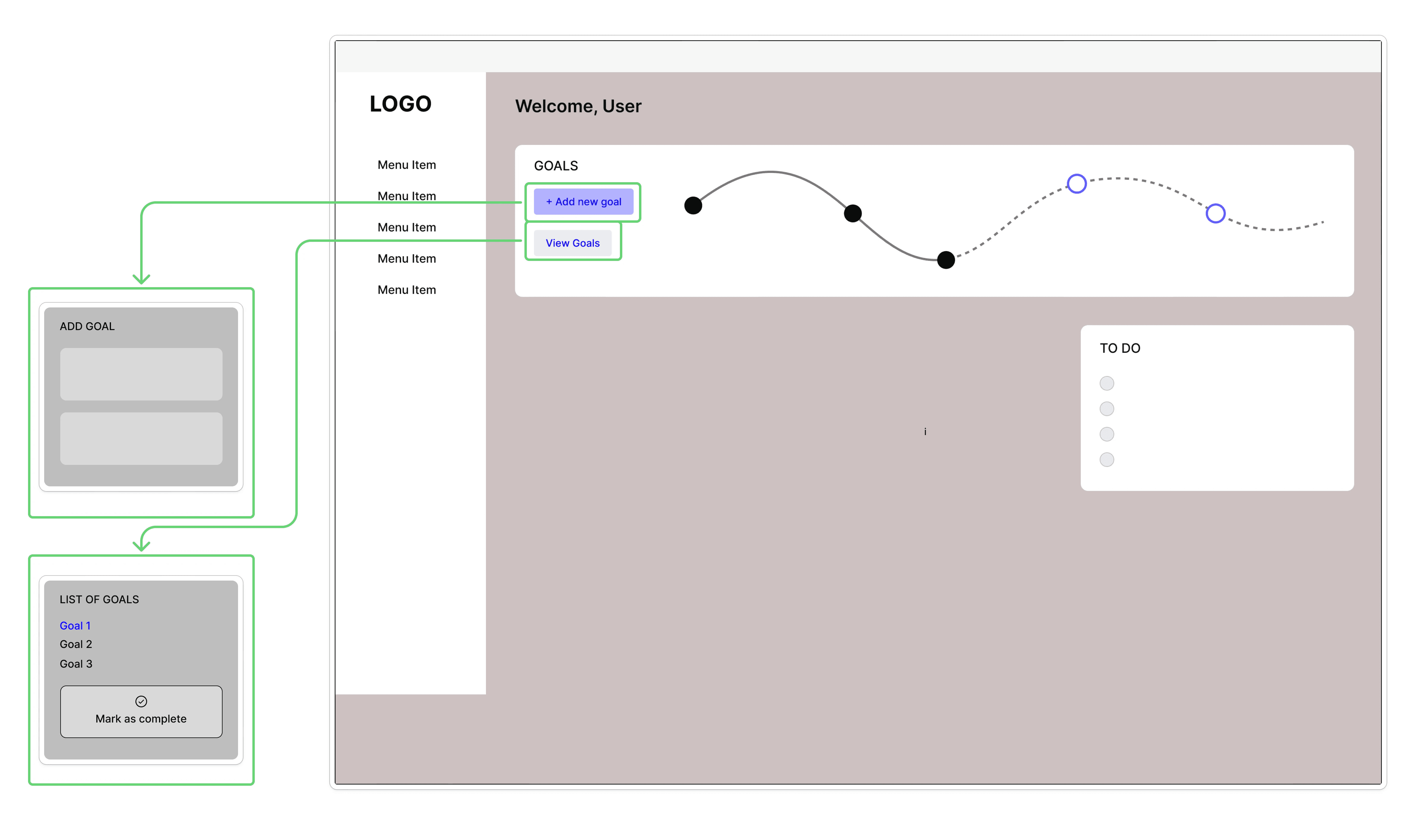
Low-Fidelity
Insight
Participants clicked on the curved timeline, interpreting it as interactive rather than decorative. Users expected to be able to both insert new goals directly along the timeline and revisit completed goals for reflection.
Design Changes
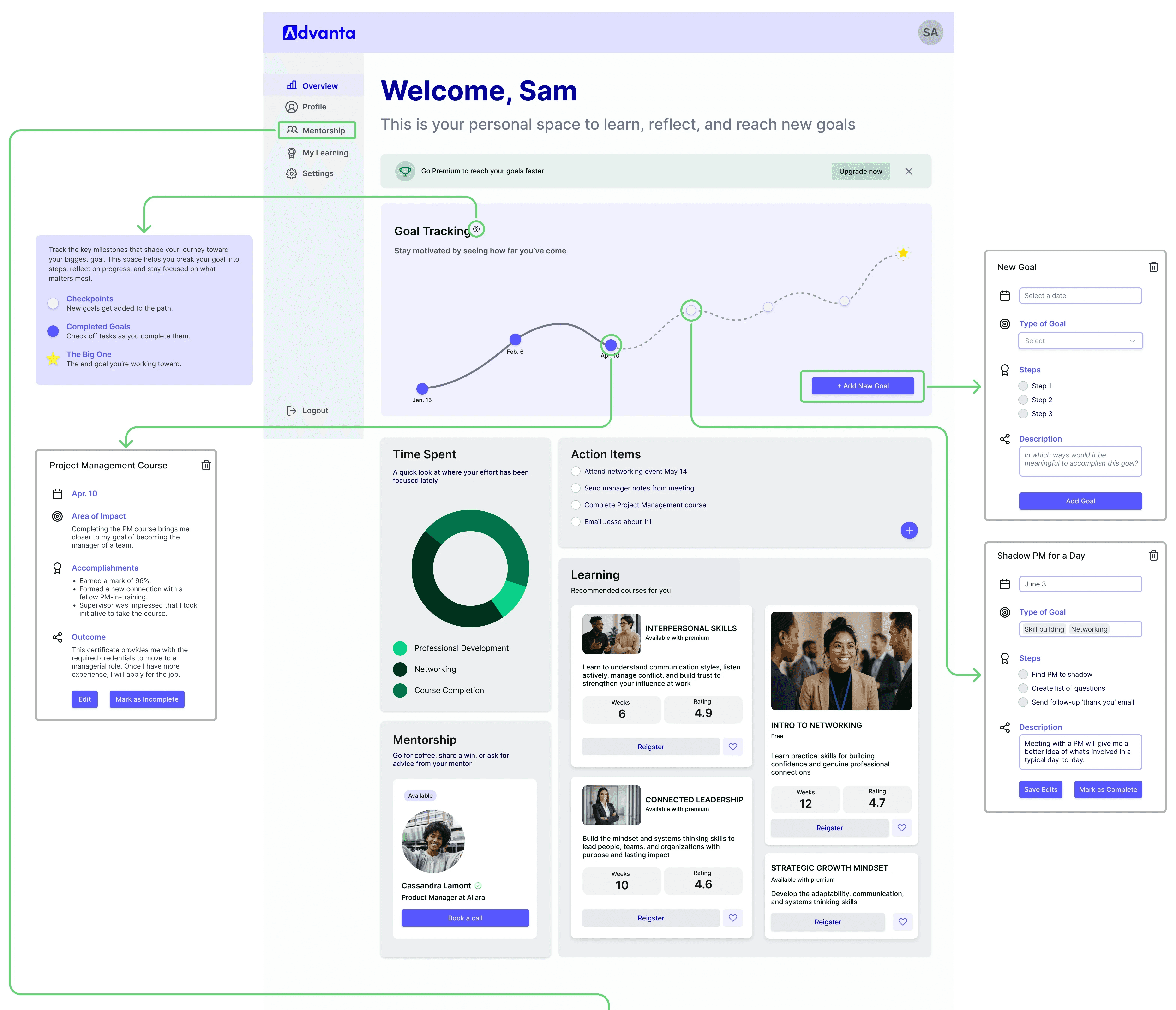
Completed goals within the timeline were made clickable, allowing users to review past achievements. The timeline remained view-only, while goal creation stayed within the existing “Add Goal” flow to ensure goals were accurately mapped across time.
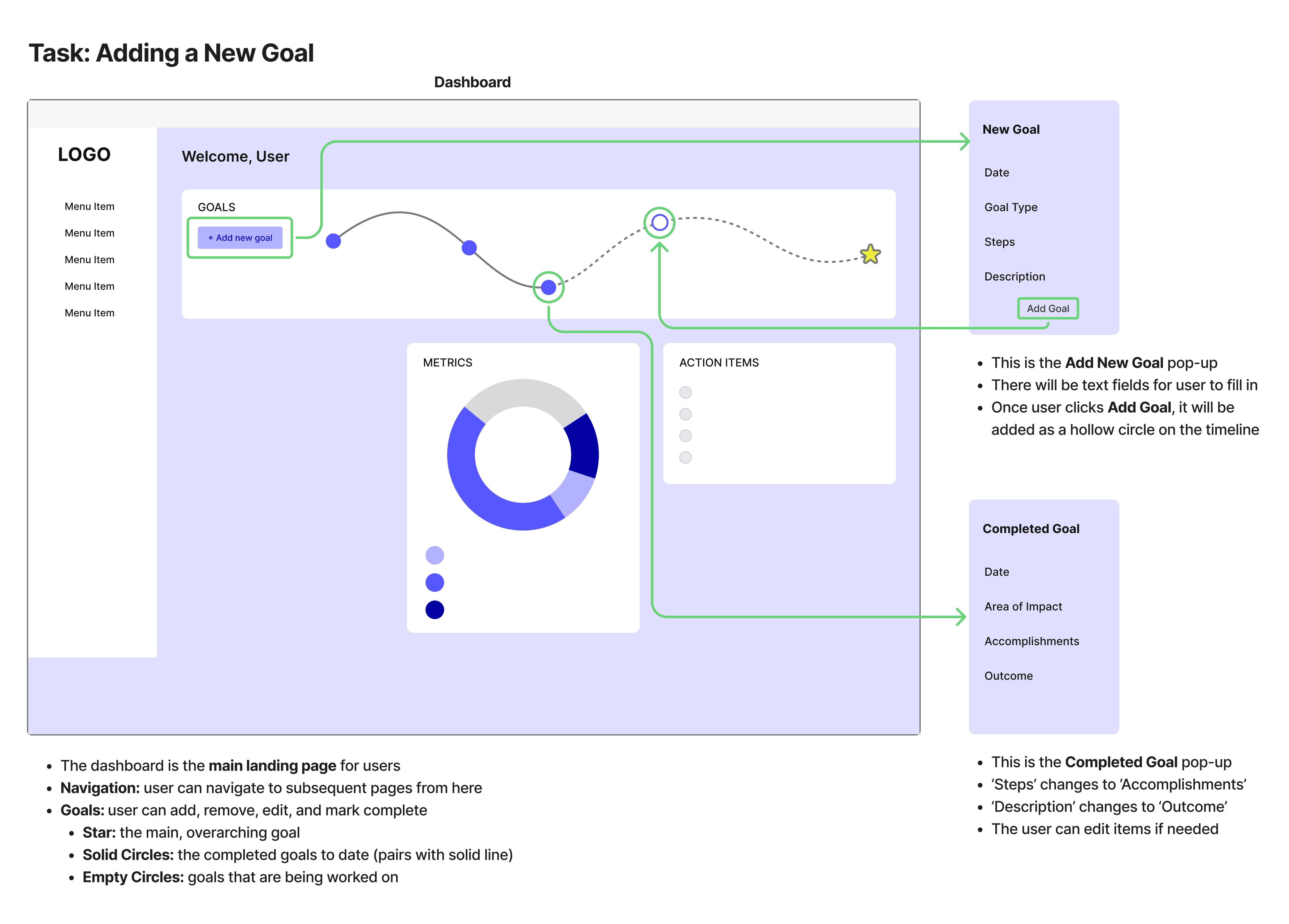
Medium-Fidelity
Insight
While participants were able to complete the task, several were unsure how certain elements functioned and expressed a desire for clearer guidance without disrupting their workflow.
Design Changes
To reduce ambiguity, clickable question mark icons and lightweight modal explanations were introduced.
Design
Brand Design
The Visual System
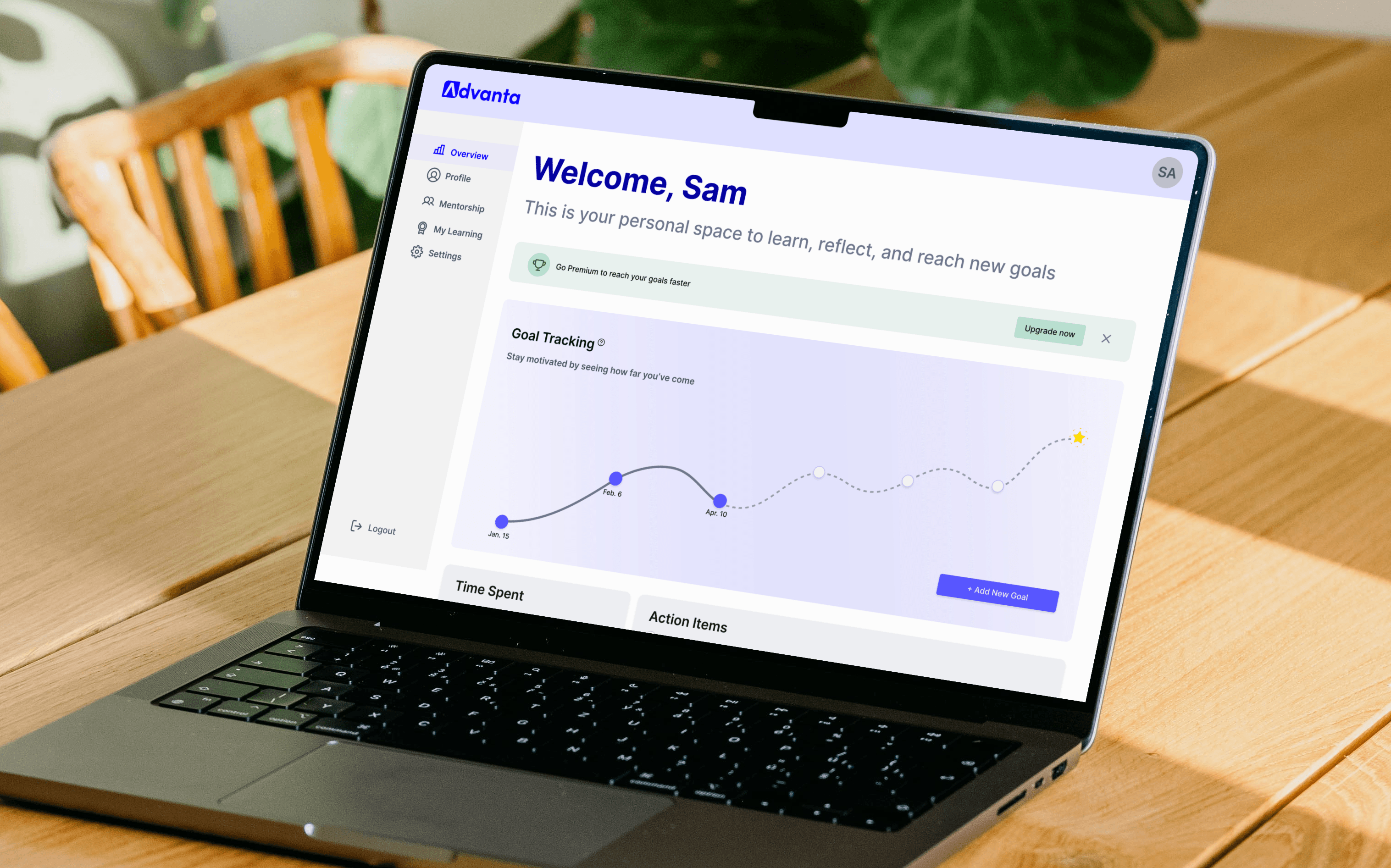
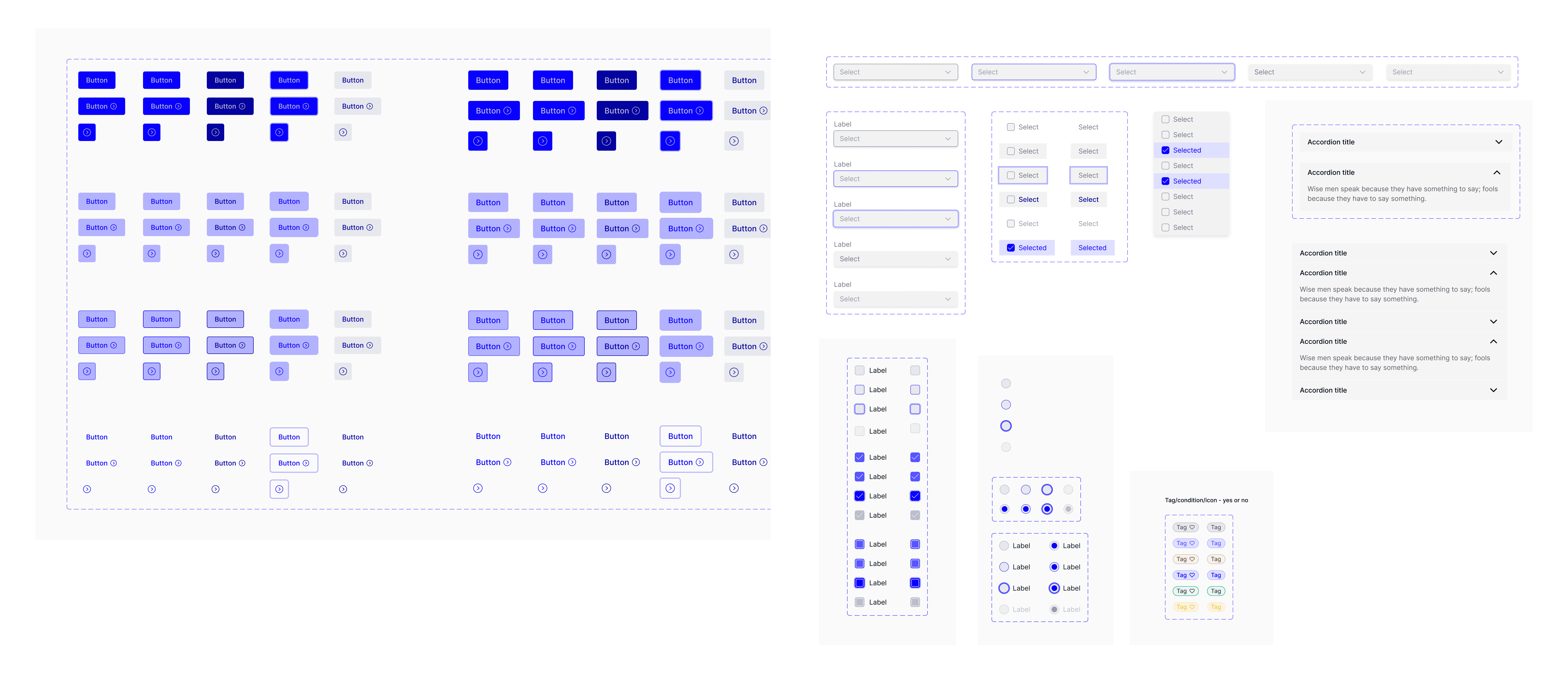
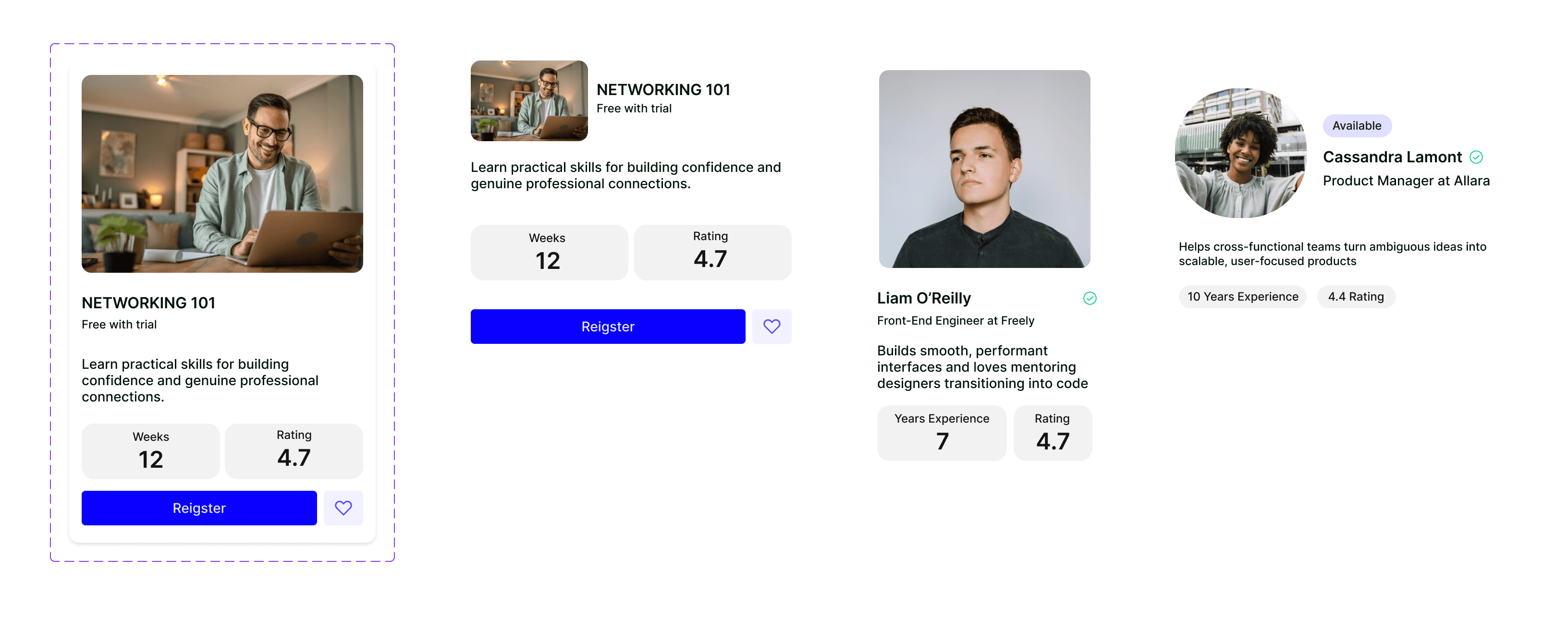
I designed Advanta’s brand identity to feel approachable and professional. I used clean typography and colour, with a chevron mark in the logo to signal growth. I adapted an existing UI kit to match the brand and built custom components, including cards and modals. I structured the system with design tokens and semantic variables in Figma to support scale.
Colour
Created colour tokens using naming conventions (e.g., color/brand/forest/700)
Text
Defined semantic text variables (e.g., text-primary, text-secondary) and created scalable type styles for display, headline, title, body, and label.
Components
Built reusable components to ensure consistency across flows.
High-Fidelity Wireframes
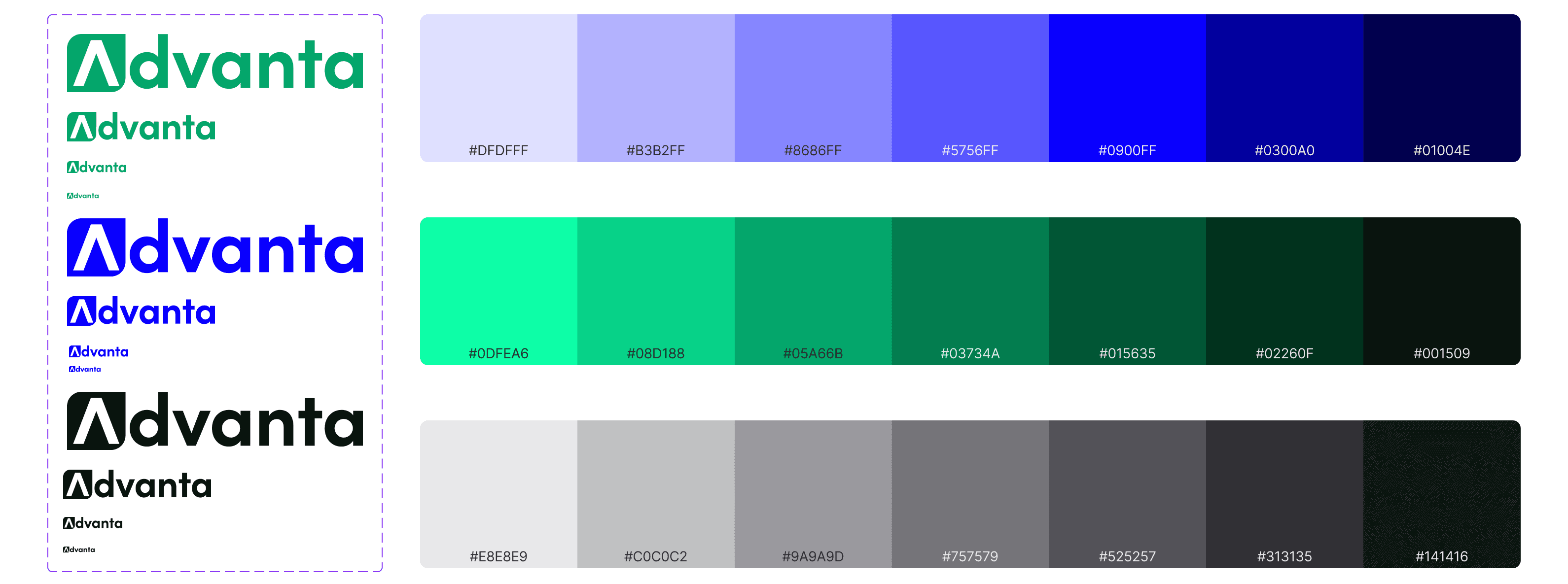
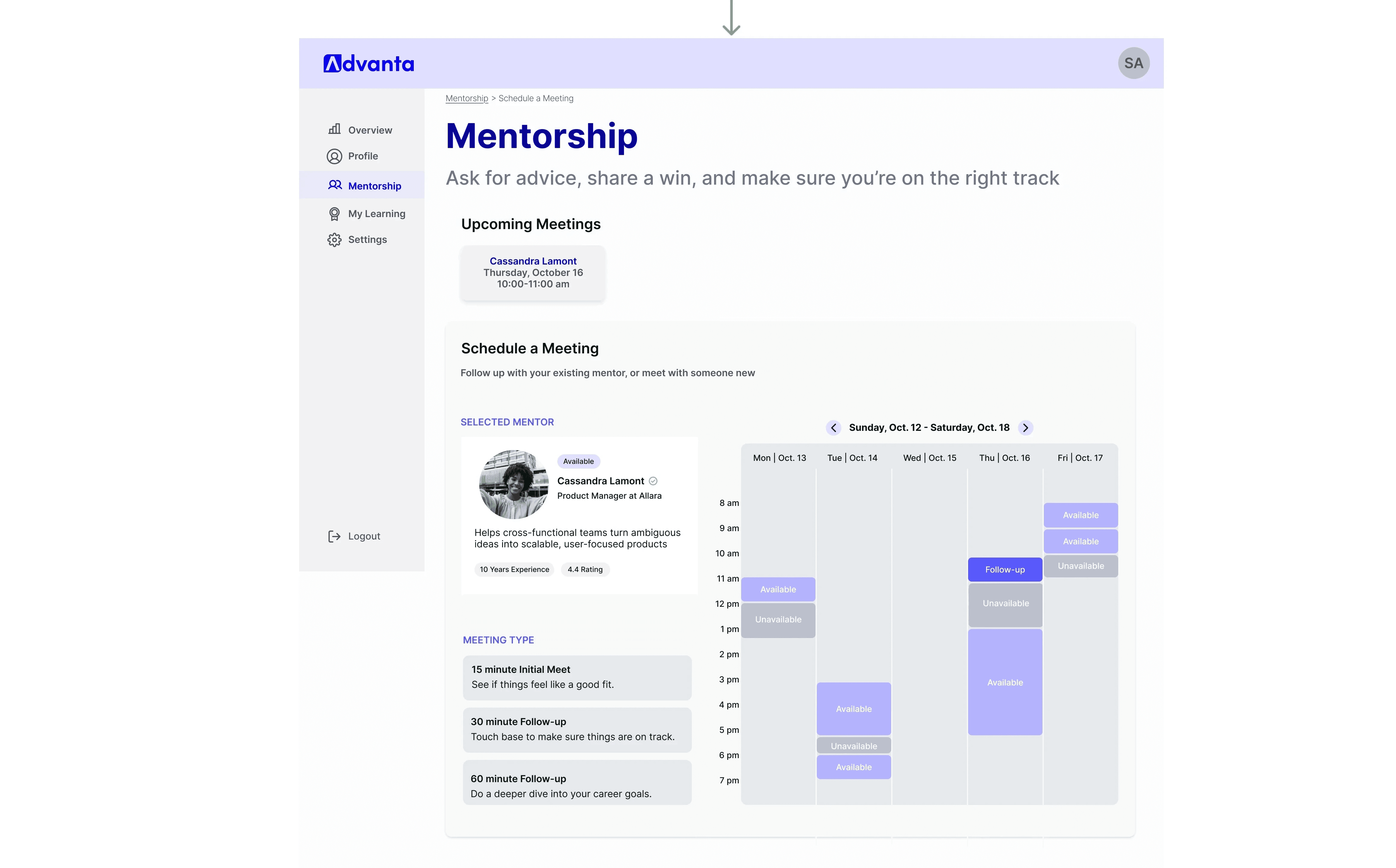
This stage improved the goal-tracking flows and added mentorship browsing and scheduling. Help icons and modals were included. The dashboard was designed to allow new tools to be added later without changing the main experience.
Prototype
Interactive walkthrough
This short walkthrough shows how a user would move through Advanta’s core features, including goal tracking, mentorship discovery, and scheduling.
Outcomes & Learnings
This project showed me how important it is to look at business goals early to understand where a product can realistically fit and what makes it different from existing tools. It also reinforced the value of testing core features before spending time refining visuals. Watching users interact with the prototype challenged some of my initial assumptions and reminded me to design based on real behaviour rather than my own instincts.
Outcomes
Redefined the goal timeline as an interactive element after users attempted to click it during testing.
Added contextual help indicators to reduce confusion identified during medium-fidelity testing.
Confirmed that users could easily add and complete goals through testing before moving into high-fidelity design.
Taking It Further
After completing the original prototype, I wanted to explore how the concept could move closer to a real product.
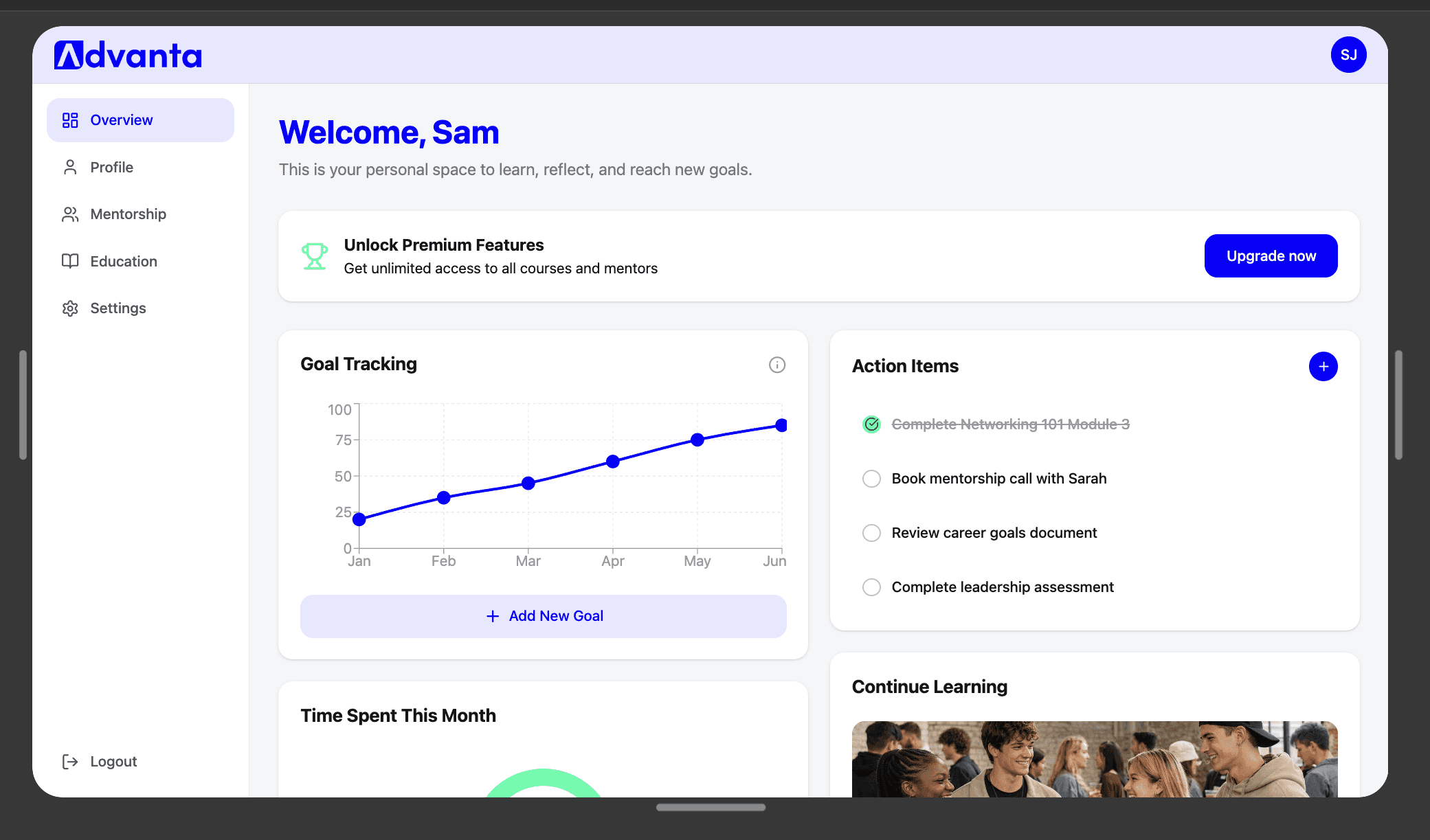
I recreated Advanta using AI-assisted tools to generate a responsive web app prototype. This allowed me to test layout systems, component structure, and interaction flows in a more realistic environment.
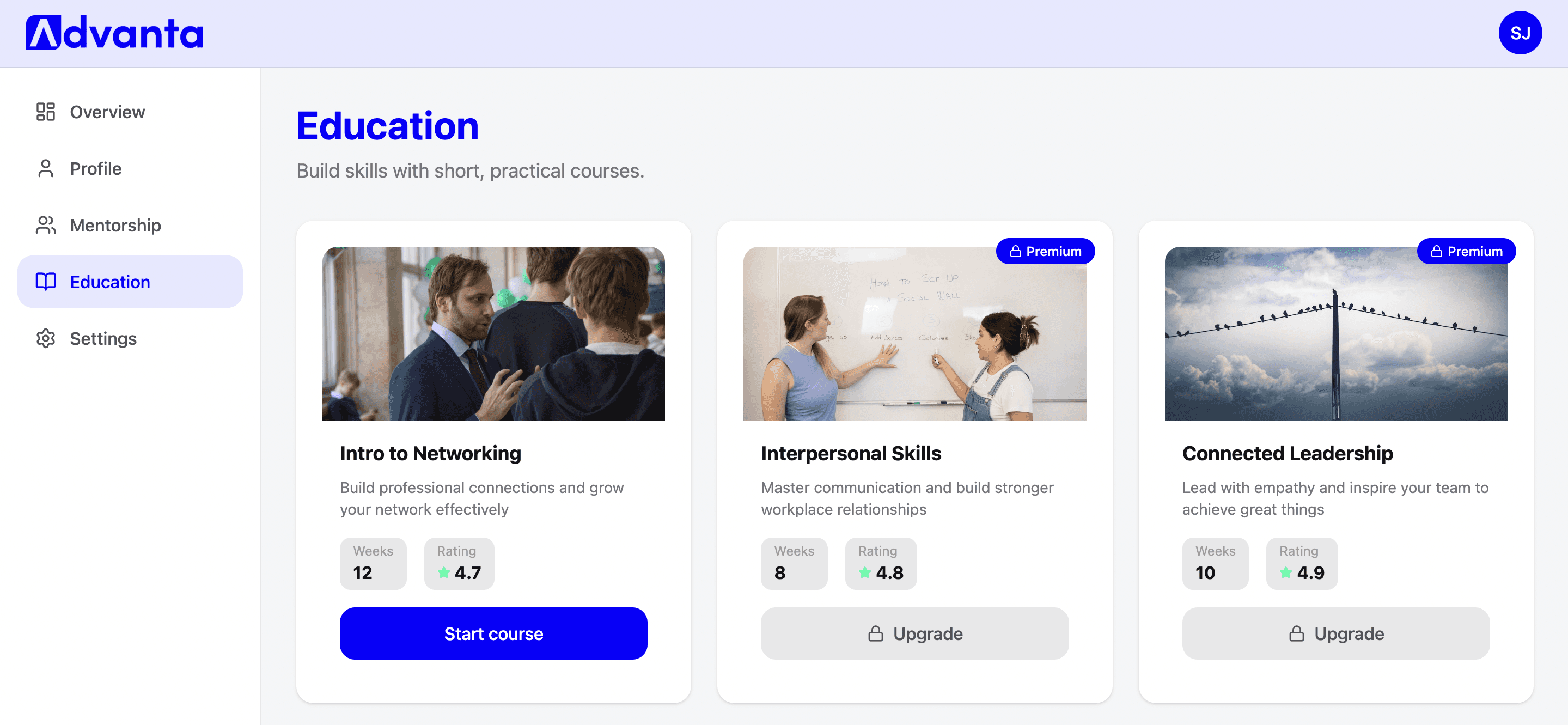
The demo includes working navigation, modals, gated course access, and responsive behaviour across screen sizes.
The goal was to understand how the design system translates from a design prototype into a functional interface, and where adjustments are needed when moving toward implementation.